


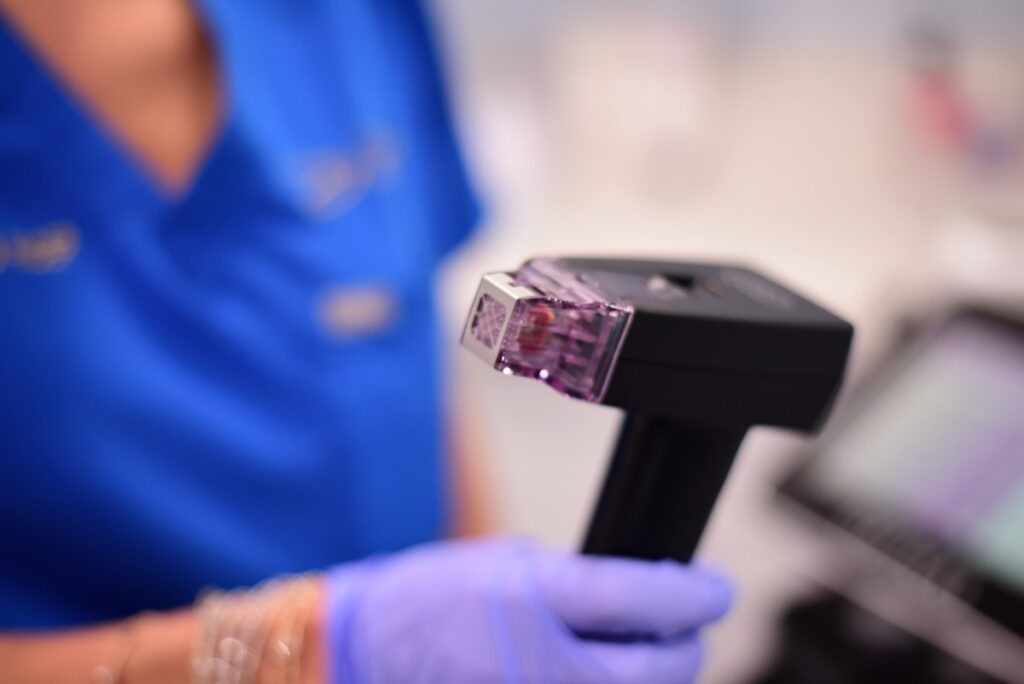
Morpheus8 is an FDA cleared device that combines microneedling with radiofrequency energy, delivering both through the same gold tipped needles at depths standard microneedling can’t reach. Made by InMode, it’s one of the few non surgical treatments that works on skin and the tissue underneath it at the same time, which is why it’s become a go to option for men dealing with jowling, a soft jawline, neck laxity, or acne scarring without wanting to book actual surgery. At Male Plastic Surgery New York, Dr. Steinbrech treats each area at a depth and intensity built around what that specific patient actually needs, not a single default setting run across every face.
What Is Morpheus8?
Two things happen during the same pass of the device. The needles themselves create a grid of tiny injury channels in the skin, which triggers the body’s normal wound healing response and gets collagen and elastin production moving. At the same moment, radiofrequency energy pulses through the tip of each needle and heats the tissue around it. That heat causes immediate collagen contraction, the tightening you can sometimes see right after treatment, and it also kicks off a slower remodeling process that keeps building new collagen for months afterward.

The depth is what actually separates Morpheus8 from ordinary RF microneedling. Most devices in this category work at a millimeter or two below the surface. Morpheus8 can go as deep as eight millimeters, reaching past the dermis into the subdermal fat and connective tissue. That’s a meaningfully different treatment than something working on skin alone. Reaching that fat and connective tissue layer is what lets Morpheus8 improve contour and firmness in ways a surface only treatment simply can’t touch, and it’s a big part of why it’s used for jawline definition and body contouring, not just skin texture.
Like other fractional treatments, only a portion of the tissue gets treated in each pass, with healthy tissue left standing in between. That’s what keeps recovery in the range of days rather than weeks, while still producing a real structural result underneath.
What It Treats
Jowling and a soft jawline are probably the most common reasons men book this specific treatment. The deep RF energy tightens and remodels tissue at a depth that actually changes jawline definition, something lighter surface treatments can’t do. For men who aren’t ready for a facelift but want a sharper jawline than skincare alone will ever produce, this is often the first real option worth discussing.
Neck and submental fullness respond particularly well too. That area under the chin is notoriously difficult to treat with anything short of surgery, and the deep tissue remodeling here produces genuine improvement in tightness and the transition line between neck and jaw.
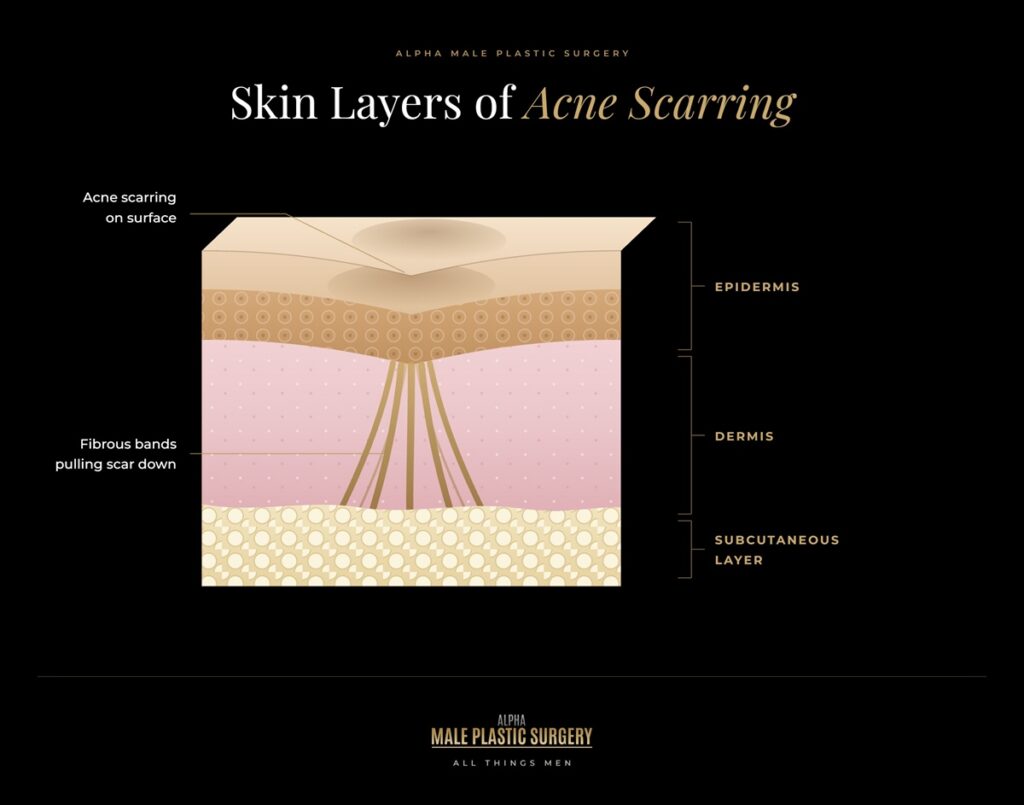
Acne scarring is another strong use case, and it works differently here than it does with laser resurfacing. The needling breaks up the fibrous scar tissue sitting under a pitted scar while the RF energy stimulates new collagen to fill the space, and the surface pass smooths what’s left on top. Men who’ve had boxcar or rolling scars for decades sometimes see more change from this than they expect.
Texture and enlarged pores improve across the whole treated area, a byproduct of the same microneedling and collagen response driving everything else.
Stretch marks are a less obvious use case but a real one. The deep collagen remodeling can meaningfully improve both the texture and color of stretch marked skin, something most topical treatments never touch.
For larger areas, there’s Morpheus8 Body, essentially the same technology built for the abdomen, inner arms, thighs, and knees, treating skin laxity and subdermal tissue the same way the facial device does. If body skin tightening is the actual goal, our BodyTite skin tightening page covers a related, more surgical option worth comparing against this one.
Why Skin Tone Isn’t a Limiting Factor
This is where Morpheus8 differs from most laser resurfacing, including CO2 fractional laser, in a way that actually matters for a lot of men. Laser treatments like CO2 work by targeting light absorbing pigment in the skin, which is exactly why deeper, more melanin rich skin tones carry extra risk with those treatments.
Radiofrequency energy doesn’t rely on pigment absorption at all. It heats tissue through electrical resistance instead of light, so the treatment doesn’t interact differently with melanin the way a laser does. That’s what people mean when they call Morpheus8 color blind technology, and it’s the reason it’s considered one of the safer resurfacing options across the full range of skin tones, without the same elevated risk of hyperpigmentation that comes up with ablative lasers.
That said, a good consultation still matters. Skin tone isn’t the only variable a provider should be considering before treatment.
Cost for Morpheus8 Treament
The cost of Morpheus8 varies with each patient—depending on intensity of treatment, targeted area(s) and more. On average, Morpheus8 costs about $1,500 per face/neck treatment. During your consultation, a full treatment plan might be discussed to cover all sessions in one sum.
How Long Does it Take to See Results?
Some tightening is visible within the first few days, mostly from the immediate collagen contraction. The bigger changes build over the following weeks as new collagen forms, with most patients seeing their most noticeable improvement around the three week mark. Results continue developing for up to three months after that. Most treatment plans run one to three sessions depending on how much correction is needed, spaced a few weeks apart to let each round of collagen building finish before the next pass.
How Recovery Works
Recovery generally runs three to seven days, depending on the treated area and how intense the settings were. Redness and mild swelling are normal in the first day or two, and some men notice small pinpoint marks from the needles that fade within days.
Once the visible healing is done, ongoing care still matters if you want to actually keep the result. Moisturizing the area, staying out of direct sun, and applying broad spectrum sunscreen daily all protect the new collagen while it continues remodeling underneath the surface.
Frequently Asked Questions: Morpheus8
Does Morpheus8 hurt? A topical numbing cream is applied before treatment, and most men describe the sensation as pressure and heat rather than sharp pain. Some areas, like directly over bone, can feel more intense than others.
How many sessions will I actually need? Most treatment plans run one to three sessions, spaced a few weeks apart. The right number depends on how much correction you’re after and how your skin responds to the first round.
Is Morpheus8 safe for darker skin tones? Yes. Since it works through radiofrequency heating rather than light absorption, it doesn’t carry the same pigment related risks that come with laser based resurfacing, which is part of why it’s often recommended over CO2 laser for men with deeper skin tones.
Can Morpheus8 fix a double chin or neck fullness? It’s genuinely effective for skin laxity and tightening in that area, but it treats skin and connective tissue, not significant fat volume. Men with real submental fat as the primary concern usually need that addressed separately before or alongside Morpheus8.
How is this different from a facelift? Morpheus8 tightens and remodels tissue non surgically, and it can meaningfully improve mild to moderate laxity. It doesn’t remove excess skin the way a surgical facelift does, so significant sagging skin typically still needs a surgical conversation to fully correct.
How long do results last? Results build for up to three months after treatment and generally hold well beyond that, though normal aging continues in the background the way it does after any skin treatment. Maintenance sessions down the line can extend the result further.
 Douglas S. Steinbrech, M.D., F.A.C.S. is a plastic and reconstructive surgeon that specializes in male aesthetics. Dr. Steinbrech is certified by the American Society of Plastic and Reconstructive Surgeons and a diplomate of the American Board of Plastic Surgery.