


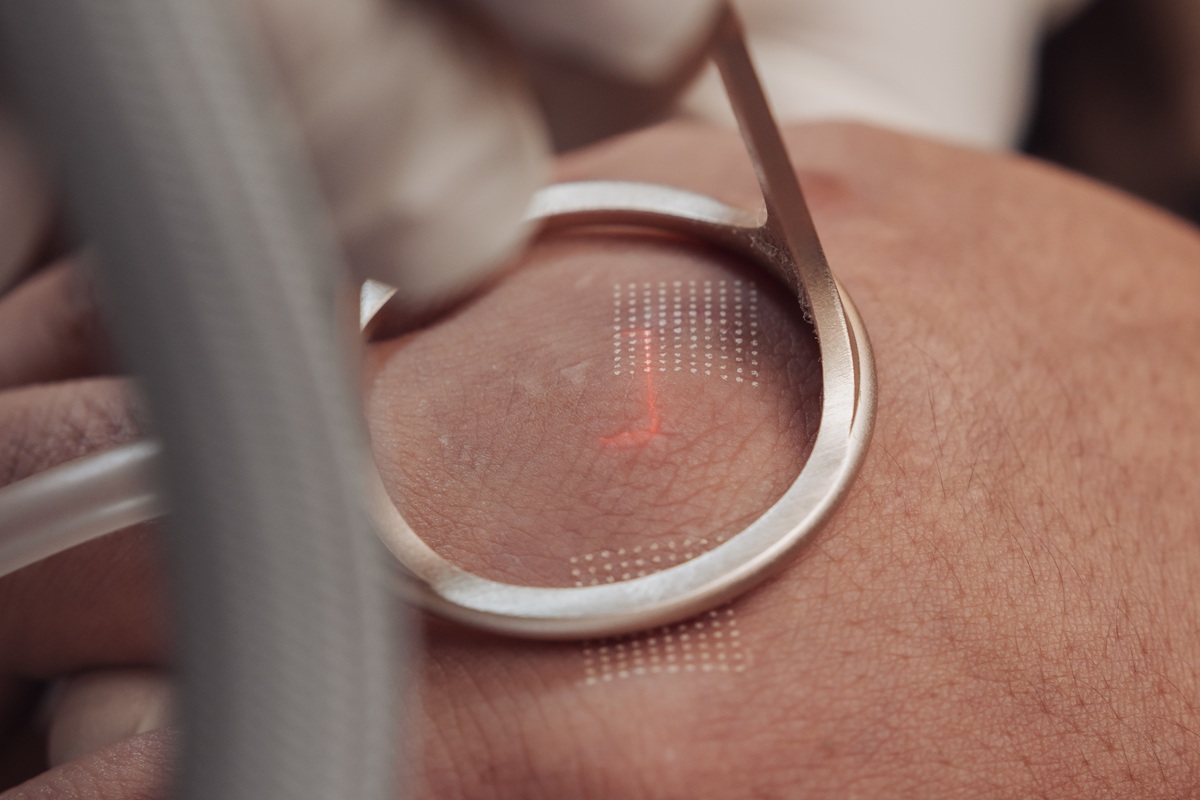
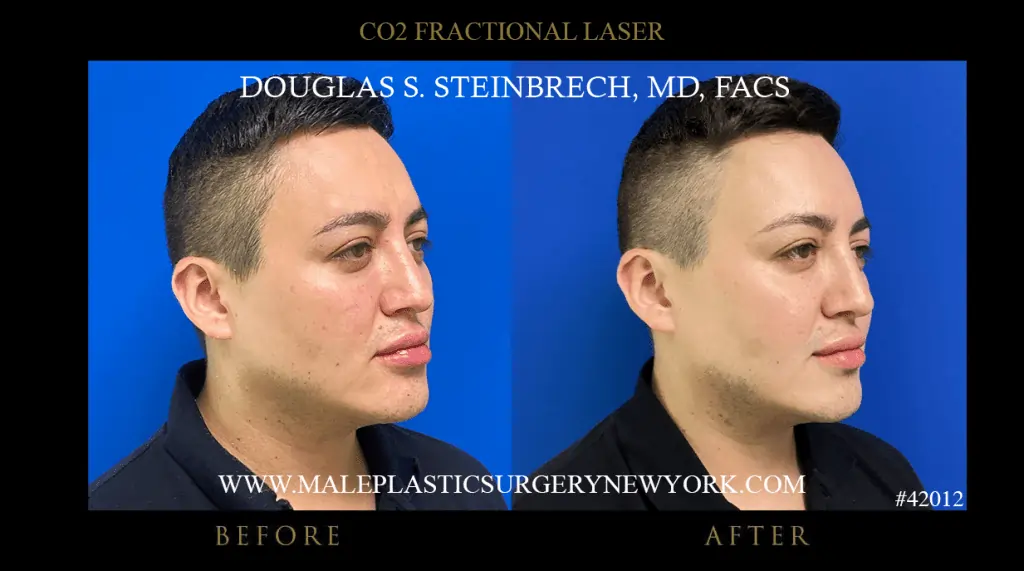
A CO2 fractional laser removes damaged skin in a grid of microscopic columns instead of stripping the whole face at once. That’s the entire idea behind “fractional.” Older CO2 lasers treated every square millimeter of skin in one pass, which worked, but meant weeks of raw, exposed healing. Splitting the treatment into thousands of tiny columns, with healthy tissue left standing between each one, gets you nearly the same depth of collagen rebuilding with a fraction of the downtime. For acne scarring, sun damage, deep wrinkles, or skin that’s just lost its structure over the years, this is one of the few treatments that changes something rather than just polishing the surface for a week.
How The Laser Actually Works
Each pulse burns a narrow column straight down through the epidermis and into the upper dermis. The damaged tissue in that column vaporizes and eventually sheds. That’s the resurfacing half of the treatment, and it’s the part responsible for smoother texture within the first couple of weeks.
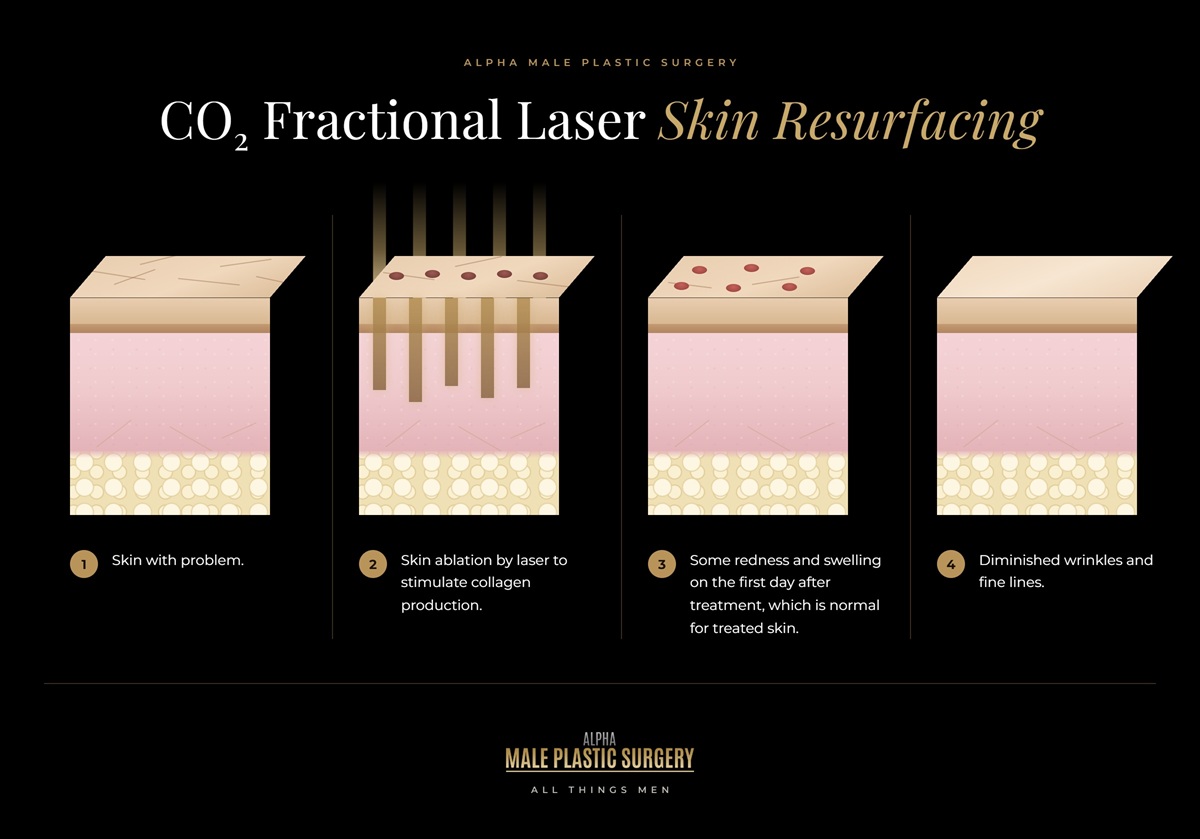
The other half happens slower and matters more. The heat from each pulse tells the body to rebuild collagen and elastin in that spot, and that rebuilding continues for two to three months after the skin looks fully healed. The peeling you see in week one isn’t the result. It’s the demolition phase. The actual result shows up later, as new collagen tightens and restructures the skin underneath.
Men’s skin runs thicker and denser in collagen than women’s, largely from testosterone’s effect on the dermis. Settings dialed in for thinner skin can under treat a man’s face entirely, missing the depth needed to reach real scar tissue or deep lines. A practice that treats men specifically should be adjusting for that, not running the same protocol across every patient.
What CO2 Treats
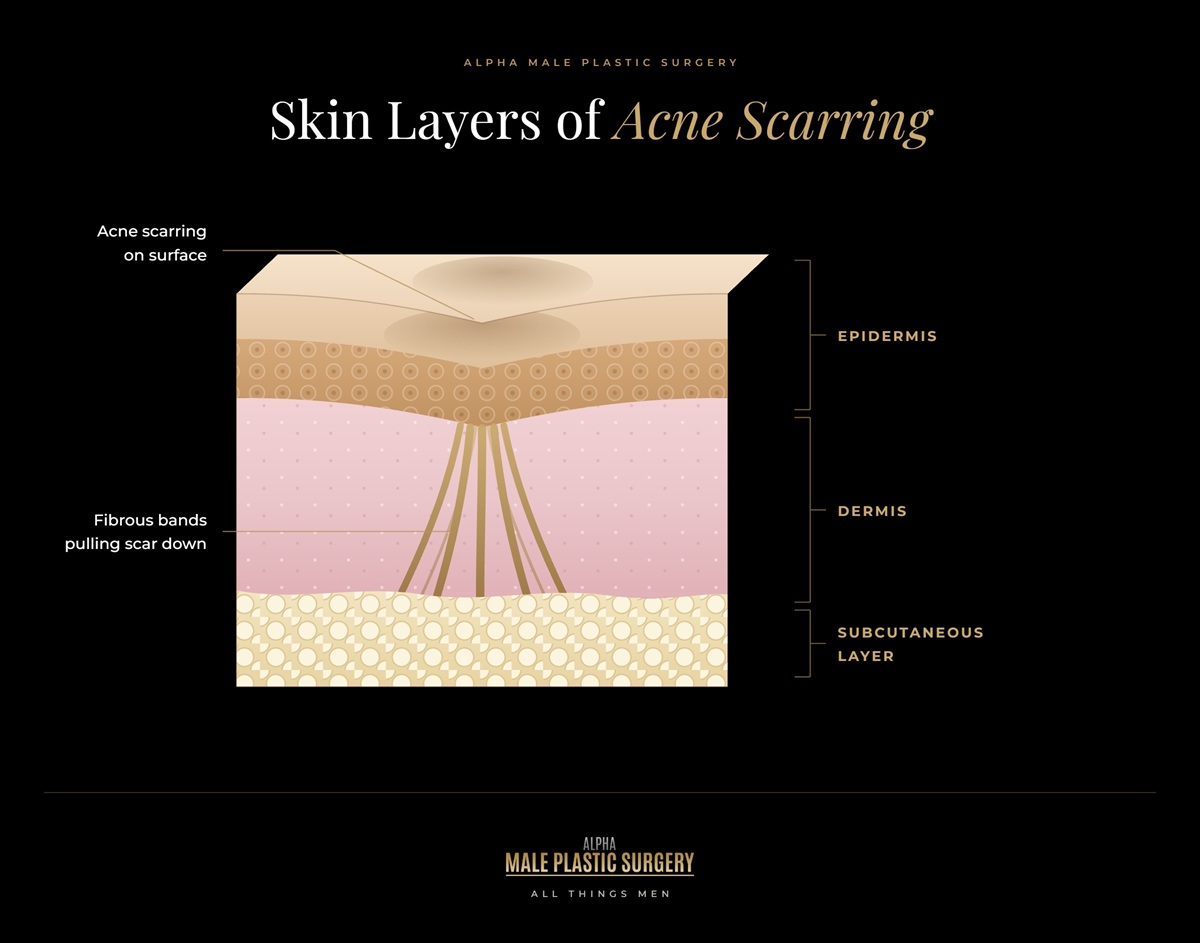
Acne scarring is where this treatment earns its reputation. Pitted or boxcar scars from cystic acne in your teens or twenties don’t fade with time on their own, and CO2 resurfacing is one of the few non surgical options that rebuilds collagen underneath the scar rather than just smoothing what’s on top of it.
Sun damage responds well too, and shows up on men’s skin a bit differently, partly because men skip daily sunscreen at higher rates than women do. The laser handles both the visible pigment and the rougher texture that years of UV exposure leaves behind.
Deep wrinkles around the eyes, forehead, and mouth improve because the laser reaches the layer where collagen breakdown actually happens. Surface treatments smooth these temporarily. This one addresses the layer underneath.
Then there’s a concern that almost never gets mentioned on a general dermatology page: shaving related scarring. Years of razor use and ingrown hairs, especially pseudofolliculitis barbae, the chronic razor bump condition common in curlier facial hair, leave real texture and pigment damage in the beard area. Fractional resurfacing can improve this, though it takes a lighter touch given how close the treatment area sits to hair follicles.
Enlarged pores, uneven tone, surgical scars, and general skin laxity round out the list. Anything involving surface texture or structural collagen is fair game for this treatment.
Is CO2 Right For You?
Good candidates are in reasonable health, aren’t dealing with an active acne breakout, and understand this involves real downtime, not a lunch break procedure. Skin type is the bigger factor, and it’s worth actually explaining why instead of just flagging it as a checkbox.
A fully ablative CO2 laser, the traditional kind, strips the entire outer layer of skin in one pass and generates a lot of heat doing it. For decades that limited safe use to lighter skin, Fitzpatrick types I through III, because melanocytes, the cells that produce pigment, react more aggressively to heat and trauma in deeper, more melanin rich skin. Push that same thermal load into Fitzpatrick types IV through VI and melanocytes can overreact in either direction. Sometimes that means post inflammatory hyperpigmentation: dark, stubborn patches that can take months to fade. Sometimes it goes the other way, permanent hypopigmentation, where pigment stops producing entirely and leaves lighter patches that don’t come back. In severe cases, that much heat can cause real structural scarring.
The fractionated approach changes this math specifically for darker skin, not just as a general upgrade. Treating a fraction of the surface per pass, at settings scaled down from what a fully ablative device uses, keeps the thermal load low enough to avoid pushing melanocytes into that overreactive state. Darker skin isn’t excluded here. It’s treated with a genuinely different, more conservative protocol built around that biology, and a provider running the same aggressive settings on every skin tone is skipping a step that actually protects patients.
A few other things rule people out or push treatment back. A history of cold sores means antiviral medication before and after treatment, since the laser can trigger an outbreak even years after the last one. Isotretinoin use within the past six to twelve months usually means waiting, since it changes how skin heals. And men prone to keloid scarring need an honest conversation about risk before booking, since the same healing response that causes keloids can complicate laser recovery too.
What Your Appointment Actually Looks Like
Numbing goes first: a topical anesthetic given time to fully take effect, sometimes paired with local injections for deeper treatment or a larger area. The laser itself runs thirty to ninety minutes depending on how much skin is being treated. A single pass covers most mild concerns, fine lines or light texture work. Deeper scarring or heavier sun damage sometimes gets a second pass in the same visit, which increases both the result and the recovery time. That call gets made in the room based on how your skin actually responds, not decided ahead of time.
How Many Sessions, and How Long Results Hold
A single session gets many men a real result, especially for moderate sun damage or mild scarring. Deeper acne scarring or more extensive wrinkling sometimes calls for a second round several months later, once the first has fully healed. Once the collagen rebuilding finishes, results generally hold for years, though normal aging and sun exposure will gradually soften the effect the way they do with anything. This isn’t a series treatment the way microneedling or some lighter lasers are marketed. It’s closer to a single structural change with a long stretch before a second round would even be worth considering.
How It Compares to Other Options
Microneedling triggers a similar collagen response through mechanical injury instead of heat. It’s gentler and involves less downtime, but usually takes more sessions to reach a result comparable to what CO2 does in one or two. Chemical peels work the surface layer well for tone and mild texture but don’t reach the dermis, so they’re weaker against real scarring or deep wrinkles. Non ablative fractional lasers land in between: less downtime than CO2, but a milder single session result that usually needs a longer series to catch up. The right pick comes down to how much downtime you can actually afford and how significant the underlying problem is, and that’s better discussed directly than guessed from a chart online.
Cost Range for CO2 Fractional Laser Resurfacing
Full face CO2 fractional resurfacing runs between $4,500 and $5,500 in NYC, depending on how much of the face is treated, how many passes are needed, and whether anything else gets combined into the same visit. A real number only comes after your skin has actually been looked at, since two men can carry the same general concern with very different treatment needs underneath it.
Frequently Asked Questions: CO2 Laser
Does it hurt? Most men describe it as heat and mild stinging during the procedure, kept manageable with topical numbing. The bigger discomfort shows up the first day or two after, closer to a sunburn than anything sharp.
How long until I can be seen in public without explaining my face? Most men are comfortable going out bare faced around one to two weeks post treatment, though the skin often stays a little pink for a few weeks past that.
Can this actually fix old acne scars? Yes. It’s one of the stronger options for that specific problem, since it rebuilds collagen underneath the scar rather than just smoothing the surface above it.
Is it safe for darker skin tones? Yes, with the right protocol. A standard aggressive setting built for lighter skin carries real risk for deeper tones, since pigment producing cells react more strongly to heat, but a fractionated approach with adjusted settings keeps that risk in check without ruling darker skin out of candidacy.
Do I need more than one treatment? Many men get a meaningful result from one session. Deeper scarring or more extensive damage sometimes benefits from a second round months out, but this isn’t an ongoing series the way some laser categories are sold.
What should I do before my appointment? Skip sun exposure and tanning for at least two weeks beforehand, stop retinoids and strong exfoliants for a few days prior, and show up with clean skin, no makeup or other products.
 Douglas S. Steinbrech, M.D., F.A.C.S. is a plastic and reconstructive surgeon that specializes in male aesthetics. Dr. Steinbrech is certified by the American Society of Plastic and Reconstructive Surgeons and a diplomate of the American Board of Plastic Surgery.